Mit Ihrer Doktorarbeit bei PROFACTOR setzten sie Standards!

Die Industrie ist auf wissenschaftliche Exzellenz angewiesen. Sie forschen in einer Disziplin, die dazu einen Betrag leisten kann?

Wir freuen uns Sie und Ihr Forschungsthema kennenzulernen!

Jetzt Neu: einfach online bewerben
Werden Sie Teil eines erfolgreichen Teams und bewerben Sie sich jetzt gleich online.

onlinebewerbung

„Standort Wien oder Steyr“

Wir freuen uns über Ihre aussagekräftige Bewerbung – bevorzugt online.

PROFACTOR GMBH

Im Stadtgut D1 | 4407 Steyr-Gleink
Tel.: +43 (0)7252 885-0 | Fax: +43 (0)7252 885-101

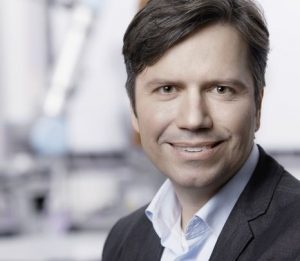
02_andreas_pichler_technischer_gf_web

Ihr Ansprechpartner

Dr. Andreas Pichler
CTO

+43 72 52 885 306
andreas.pichler@nullprofactor.at

„Das beste Training liegt immer noch im selbständigen Machen.“
Cyril Northcote Parkinson

Wenn Lernen und Üben zudem noch Freude bereiten, sind Forschritt und Erfolg programmiert. Du bist auf der Suche nach mehr Wissen und einem Platz, um Neues auszuprobieren?

Dann schick uns doch deine Bewerbungsunterlagen mit deiner Idee für eine Bachelor- oder Masterarbeit.

Wir freuen uns darauf, dich kennenzulernen!

Einfach online bewerben
Werde Teil eines erfolgreichen Teams und bewerbe dich jetzt gleich online .


Wir möchten dich darauf hinweisen, dass Bewerbungen nur  online – unter www.profactor.at oder per E-Mail: personal@nullprofactor.at akzeptiert werden.

Bei Fragen zur Stellenausschreibung stehen dir unsere MitarbeiterInnen gerne telefonisch zur Verfügung.

Nanoimprint Lithography (NIL) is a key technology for the cost-effective and high-resolution replication of nanostructures over large areas. By pressing a nanostructured
stamp into a UV-curable polymer, functional surfaces can be fabricated with nanoscale precision. These structures are essential for applications in photonics, sensing, catalysis, and biotechnology.

In the ongoing research project BEES4CO2RR, PROFACTOR is developing advanced surfaces for CO₂ reduction applications. The electrocatalytic CO₂ reduction reaction (CO₂RR) is one of the most promising pathways for CO₂ utilization due to its efficiency, versatility, scalability, and compatibility with renewable energy sources. Nanoimprint Lithography (NIL) enables precise surface structuring to introduce multiple functionalities that enhance CO₂RR performance. One key approach involves applying superhydrophilicity combined with superaerophobicity to the active material surface through bio-inspired structuring. This ensures optimal wetting of the catalyst with the electrolyte and facilitates rapid release of gaseous products, freeing catalytic sites for continued reaction—ultimately boosting activity and current stability.

At PROFACTOR, located in Steyr, we are developing advanced NIL processes to enable new applications in micro- and nanofabrication.
This master thesis offers the opportunity to contribute to one of our current research projects and help shape the future of NIL-based manufacturing in Austria and beyond.


Your Tasks

NIL for surface modification of novel CO₂ reduction surfaces:

  • Nanostructuring of gas diffusion electrode surfaces using NIL to improve CO₂RR efficiency
  • Characterize surface properties (e.g., wettability, morphology, conductivity)
  • Investigation of nanoscale topographies

>> find out more

PROFACTOR is a research and technology company focusing on industrial inspection, robotic/digital assistance, micro/nano-manufacturing, and digital printing technologies. We research and develop the production of the future. Our technological developments optimize the production of renowned industrial partners.

Photochromic materials enable reversible color changes when exposed to light of specific wavelengths. In the REPIX project, a novel AI-assisted exposure system is developed to control spatially resolved photochromic state transitions on functional surfaces. The project combines physics-based optical modeling with reinforcement learning to enable intelligent light control strategies for industrial applications.


Your Tasks

The goal of this thesis is to contribute to the development of a simulation-driven AI control framework for photochromic light patterning.

>> mehr erfahren

Nanoimprint Lithography (NIL) is a key technology for the cost-effective and high-resolution replication of nanostructures over large areas. By pressing a nanostructured stamp into a UV-curable polymer, functional surfaces can be fabricated with nanoscale precision. These structures are essential for applications in photonics, sensing, catalysis, and biotechnology.

In the S&R NIL project, PROFACTOR focuses on advancing scalable nanoimprint lithography for industrial applications, with a special emphasis on seamless stitching, pattern fidelity, and process reliability. By further developing an existing UV nanoimprint system and optimizing imprint strategies, the project enables high-precision structuring of large areas, which is crucial for functional surfaces in optics, electronics, and sensing.

At PROFACTOR, located in Steyr, we are developing advanced NIL processes to enable new applications in micro- and nanofabrication. This master thesis offers the opportunity to contribute to one of our current research projects and help shape the future of NIL-based manufacturing in Austria and beyond.


Your Topics

  • Optimization of an in-house developed-Step and Repeat UV-NIL system
  • Process development for fast and reliable replication
  • Material screening for imprinting and lift-off compatibility

>> find out more

Aktuelle, konventionelle Sicherheitseinrichtungen in Industrieroboterzellen sind unzureichend, um eine effiziente Kooperation mit großen Robotersystemen zu erreichen. Das Abschalten oder die Reduktion der Geschwindigkeit bei bloßer Annäherung des Menschen an den Roboter verhindert jede sinnvolle Zusammenarbeit. Um eine flüssige und effiziente Kollaboration von Mensch und Roboter zu ermöglichen, ist eine exakte und zuverlässige Lokalisierung des Menschen im Arbeitsraum unerlässlich.

Im Rahmen des Projekts VRoboCoop möchten wir Sicherheit und Effizienz durch den Einsatz modernster Sensorfusion steigern, da einzelne Systeme aufgrund von Verdeckungen und schwierigen Lichtverhältnissen schnell an ihre Grenzen stoßen. Im ersten Teil des Praktikums werden verschiedene Sensorsysteme (Kameras, Lidar, optische TrackingSysteme) aufgebaut und in Betrieb genommen. Dabei muss eine Möglichkeit der zeitlichen Synchronisierung geschaffen werden.

Im zweiten Teil werden industrielle Arbeitsabläufe nachgestellt und aufgenommen. Ziel des Praktikums ist ein Datenset mit verschiedenen Arbeitsabläufen zu erstellen, welches für nachfolgende Arbeiten im Bereich der Sensorfusion genutzt werden kann.

Mehr dazu

PROFACTOR ist ein Forschungs- und Technologieunternehmen mit Fokus auf industrielle Inspektion, robotische/digitale Assistenz, Mikro-/Nanofertigung sowie digitale Drucktechnologien. Wir erforschen und entwickeln die Produktion der Zukunft. Unsere techno-logischen Entwicklungen optimieren die Produktion namhafter Industriepartner.

Die Gewährleistung der menschlichen Sicherheit, bei maximaler Effizienz im Prozess und der Interaktion, stellt eine der wichtigsten Herausforderungen in der Mensch-Roboter-Kollaboration (MRK) – speziell mit großen Robotern – dar.

Aktuelle Sicherheitssysteme verhindern effiziente Mensch-Roboter-Kooperation, da sie Roboter bei Annäherung stoppen oder zu sehr verlangsamen. Im Projekt VRoboCoop soll gezeigt werden, dass eine kontextbasierte Sicherheitsbewertung – unter Berücksichtigung geplanter Bewegungen und Prozessschritte – eine effiziente Zusammenarbeit ermöglicht.

Die Ziele der Masterarbeit umfassen die Entwicklung a) eines kontextsensitiven, dynamischen Manipulationsplaners b) Selbstdiagnose-Funktionalität zur sicheren Bewegungsplanung trotz ungenauer Sensordaten und c) Untersuchung und Umsetzung von Anpassungsstrategien des robotischen Verhaltens um die Produktivität hochzuhalten.


Was Sie erwartet

Die Masterarbeit umfasst folgende Aufgaben

  • Problemanalyse, Recherche und Konzeptionierung einer Lösungsstrategie.
  • Evaluierung von State-of-the-Art Methoden zur dynamischen Pfadplanung, sowie Funktionale Erweiterung in einer MRK-Umgebung zur Oberflächenbearbeitung großer Bauteile
  • Umsetzung und Evaluierung der Resultate für einen realen Anwendungsfall

>> mehr dazu

PROFACTOR ist ein Forschungs- und Technologieunternehmen mit Fokus auf industrielle Inspektion, robotische/digitale Assistenz, Mikro-/Nanofertigung sowie digitale Drucktechnologien. Wir erforschen und entwickeln die Produktion der Zukunft. Unsere techno-logischen Entwicklungen optimieren die Produktion namhafter Industriepartner.

Die Forschung zur Mensch-Roboter-Kollaboration (MRK) beschränkt sich meist auf nachgiebige Roboter in Leichtbauweise. Industrielle Anwendungen erfordern jedoch Systeme mit hoher Traglast. Bei MRK mit großen Robotern hängt deren Akzeptanz von der Personensicherheit und vom Vertrauen der Nutzer ab.

Große Roboter wirken oft bedrohlich, weshalb Vertrauen aktiv aufgebaut und reguliert werden muss. Das Projekt VRoboCoop untersucht Methoden zur dynamischen Vertrauensbewertung während der Prozessausführung und intuitive Interaktionsmethoden (visuell, akustisch, vibro-taktil), um Absichten zwischen Mensch und Roboter bidirektional zu vermitteln. Ziel ist, respektvolle, aber sichere Interaktionen zu ermöglichen.

Die Ziele der Masterarbeit umfassen a) die Entwicklung einer Bewertungsskala und darauf aufbauender Machine-Learning gestützter Vorhersage-Algorithmik b) Konzeption und Umsetzung von multimodalen Interaktionsmethoden c) Entwicklung und Evaluierung einer dynamischen Vertrauensbewertung- und Steuerung.


Was Sie erwartet

Die Masterarbeit umfasst folgende Aufgaben

  • Problemanalyse, Recherche und Konzeptionierung einer Lösungsstrategie
  • Entwicklung und Integration von Hardware- und Software-Komponenten in einer modularen Architektur
  • Umsetzung und Evaluierung der Resultate

>> mehr dazu

An increasing demand for alternative processes is present in the PCB manufacturing industry. Considering photolithography as main alternative solution, inkjet printing PCBs will be: innovative, cheaper, simpler, greener, stronger and closer to the market. Compared with photolithography, inkjet printing PCBs has a clear economic advantage with the potential to cut PCB prices of more than 50%. Moreover, PCB manufacturing by inkjet printing will open new possibilities for this well-established market.
Main scope of inkjetPCB project is to develop fully inkjet printed multi-layer Printed Circuit Boards (PCBs) including embedded passive components as a commercially viable process. As outcome of this collaborative innovation project, the consortium partners plan to deliver to their customers a Complete Solution for the digital additive manufacturing of PCBs including materials, equipment and process guidelines.

PROFACTOR is an applied research center located in Steyr. We conduct research in the field of industrial assistive systems and additive micro/nano manufacturing. Our team consists of around 70 employees from 15 different academic fields. We work across disciplines to find solutions for the manufacturing industry and set standards in robotics, machine vision, simulation, 3D printing, functional surfaces and nanostructures.

Your tasks

The goals of this master thesis are

  • to develop processes, including printing, pre-treatments and post-processing of dielectric, conductive and resistive materials
  • to investigate the interface issues and compatibility among the different materials
  • to further develop the lab equipment and its sotware towards full 3D printing compatibility
  • to design and manufacture PCBs and electronic devices for demonstration

>> find out more

Improving the life quality of Europe’s increasingly elderly population is one of the most pressing challenges our society faces today. The need to treat age-related degenerative changes in e.g. articular joints or dental defects will boost the market opportunities for tissue regeneration products like implants. 3D printing has the potential to revolutionize the healthcare system by providing highly sophisticated, tissue engineered implants personalized to the patient. State of the art 3D printing technologies can provide biocompatible implants with the right macroscopic shape to fit a patient-specific tissue defect. However, for a real functionality, there is a need for new biomaterials, technologies and processes that additionally allow the fabrication of an inner multi-material microstructure that induces tissue-specific regeneration. Among the different available technologies for tissue engineering applications, 3D multi-material inkjet printing has an immense potential to address the complexity required for implant inner microstructure fabrication. However, the advance of this technology is mainly hindered by the lack of inks that exhibit the required properties to be used in a multi-material process.

Your tasks

The goals of this master thesis are

  • to develop new inkjet ink formulations based on biocompatible and biodegradable materials for 3D multi-material inkjet printing
  • to optimize the printing and curing processes of those materials
  • to investigate the interface issues and compatibility among the different materials to make possible the multi-material process
  • to perform 3D multi-material inkjet printing of biocompatibility and biodegradable materials

>> find out more

In “CondOR-EEE”, which is a national funded project, the in-situ measurement of electrical conductivity during the thermomechanical processing of wrought aluminium alloys will be tested on a laboratory scale and on an industrial scale. The conductivity needs to be measured, for example, during homogenization, heating for extrusion or rolling, and during heat aging, to be able to make predictions about the end product quality using machine learning or physical models. The electrical conductivity curve during heat treatments implicitly contains a complete fingerprint of the material. However, this fingerprint is difficult to interpret due to temperature influences on the measurement and due to the complexity of the metallurgical processes. Machine learning can be used to filter out systematic errors such as the influence of temperature. In addition to other process parameters (e.g. temperatures, extrusion speed, taping plan during rolling) end product properties can be predicted.


PROFACTOR is an applied research center located in Steyr. We conduct research in the field of industrial assistive systems and additive micro/nano manufacturing. Our team consists of around 100 employees from 15 different academic fields. We work across disciplines to find solutions for the manufacturing industry and set standards in robotics, machine vision, simulation, 3D printing, functional surfaces and nanostructures.


Your tasks

The goals of this master thesis are:

  • to analyse, preprocess and interpret data from aluminum extrusion processes
  • to train, test and evaluate machine learning methods based on this data
  • to benchmark different machine learning approaches
  • to optimize model parameters


>>> find out more

Berufsbegleitend Studieren?

Wir sind Kooperationspartner des Masterstudienganges Robotic Systems Engineering, Campus Wels.

Voraussetzung ist eine vakante Stelle im Unternehmen.

Studiengangsblatt herunterladen


Bewerbung

Haben wir ihr Interesse an dieser Position geweckt? Dann freuen wir uns über Ihre Bewerbung online – unter www.profactor.at oder per E-Mail: personal@nullprofactor.at


Kontakt

Für Fragen stehen wir jederzeit zur Verfügung! Bitte einfach melden bei:
DI Dr.techn. Andreas Pichler (Teamleitung Robotics and Automation Systems), +43 7252 885 – 306


PROFACTOR GMBH

Im Stadtgut D1 | 4407 Steyr-Gleink
Tel.: +43 (0)7252 885-0 | Fax: +43 (0)7252 885 – 217

„Standort Wien oder Steyr“

Wir freuen uns über Ihre aussagekräftige Bewerbung – bevorzugt online.

PROFACTOR GMBH

Im Stadtgut D1 | 4407 Steyr-Gleink
Tel.: +43 (0)7252 885-0 | Fax: +43 (0)7252 885-101

Ihre Ansprechpartnerin

Mag. Alexandra Siegl
Human Resources Management

+43 72 52 885 – 225
personal@nullprofactor.at

Die Anerkennung und Förderung aller Mitarbeiter ist fest in unserer Unternehmenskultur verankert. Ob Technikerin oder Techniker,  Kaufmann oder Kauffrau – wir respektieren die Individualität jedes Einzelnen und unterstützen seine Entwicklung. Der Beitrag jedes Teammitgliedes ist für die Performance von PROFACTOR entscheidend.


Werde Teil eines erfolgreichen Teams und bewirb dich für

Einfach online bewerben

Haben wir dein Interesse für eine unserer ausgeschriebenen Stellen geweckt? Dann bewirb dich jetzt gleich online.

onlinebewerbung

Initiativbewerbungen sind herzlich willkommen.

„Standort Wien oder Steyr“

Wir freuen uns über deine aussagekräftige Bewerbung – bevorzugt online.


PROFACTOR GMBH

Im Stadtgut D1 | 4407 Steyr-Gleink
Tel.: +43 (0)7252 885-0 | Fax: +43 (0)7252 885-101

Wir möchten dich darauf hinweisen, dass Bewerbungen nur online oder per E-Mail an personal@nullprofactor.at akzeptiert werden. Bei Fragen zur Stellenausschreibung stehen dir unsere MitarbeiterInnen telefonisch zur Verfügung.

Ihre Ansprechpartnerin

Mag. Alexandra Siegl
Human Resources Management

+43 72 52 885 – 225
personal@nullprofactor.at