ICanary
Project description
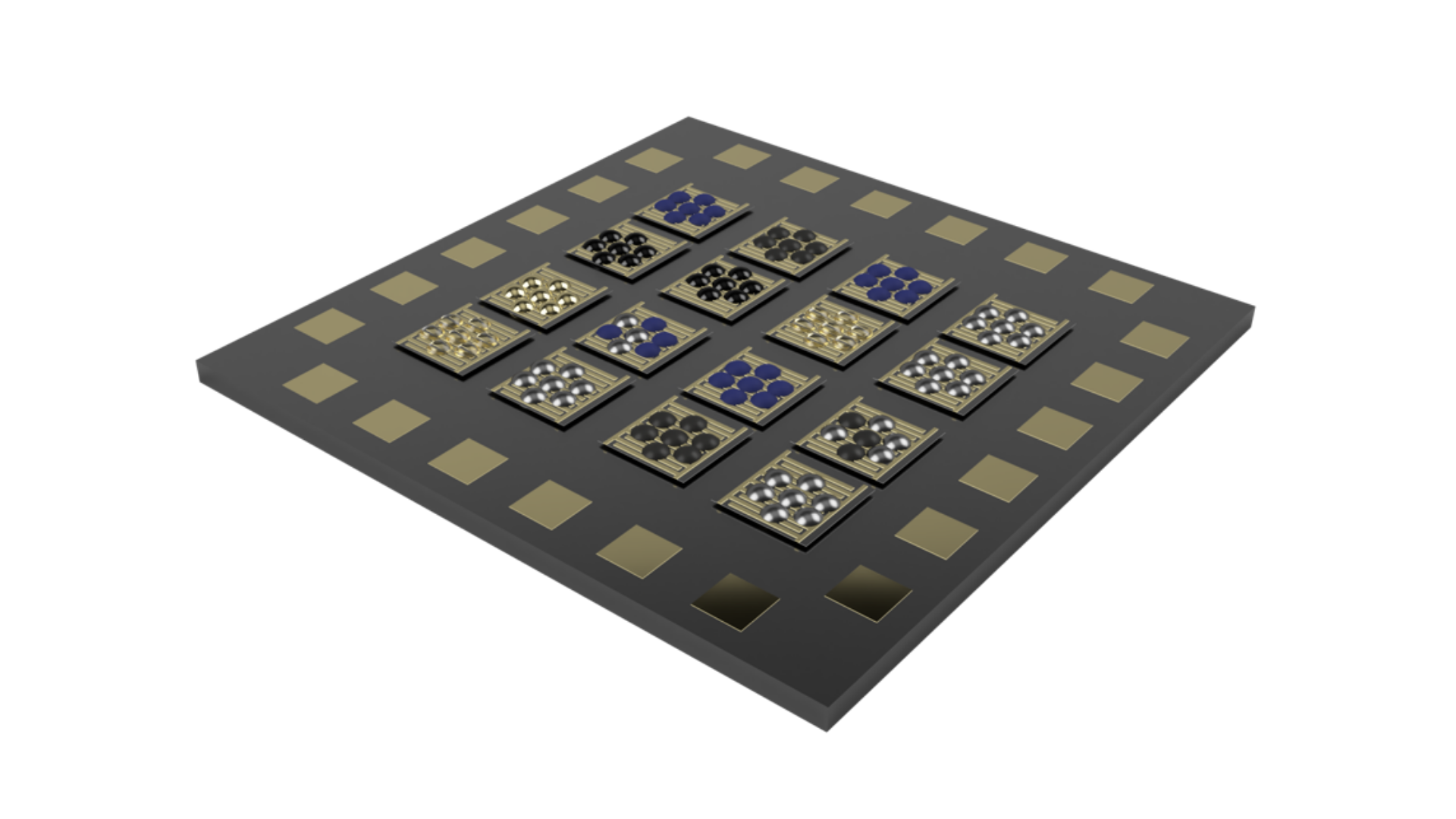
The ICanary project develops a miniaturized, multimodal sensor platform for early detection of odor and air quality parameters in indoor environments and diverse application settings. The motivation stems from the fact that indoor air is often more polluted than outdoor air, negatively impacting health, concentration, and productivity. ICanary combines innovative polymer nanocomposites with inkjet printing technology to create selective odor sensor arrays on a miniaturized chip. This platform integrates sensor functionality with energy management, energy harvesting, and wireless communication. A flexible indoor photovoltaic module powers the sensor platform autonomously. The digitally adaptable sensor network enables a versatile e-nose solution suitable for residential, workplace, industrial, agricultural, food, and medical environments.
Project objectives and technical innovation
ICanary aims to develop a conformal, self-sufficient sensor tag platform that uses a miniaturized polymer nanocomposite sensor array to accurately detect odors and air pollutants, while being adaptable to various applications through data-driven configuration. The solution combines advanced inkjet coating, modular sensor arrays, energy harvesting via flexible photovoltaics, power management, and integrated communication in one system. The technological innovation lies in merging an adaptable e-nose concept with printed nanocomposite technology and a proprietary chip design featuring energy management and wireless interface. This results in a scalable, industrial sensor platform for diverse IoT applications.
Universal smart label platform for air quality and gas monitoring
- Enables cost-effective, reusable, and recyclable sensor solutions for air quality and gas monitoring in diverse industries such as food, logistics, and environmental technology.
- Miniaturized, highly sensitive sensor arrays detect food spoilage and harmful VOCs early, resulting in less waste, longer shelf life, and enhanced consumer protection.
- The development of printable, VOC-specific polymer nanocomposites and optimized conductive inks opens new avenues for flexible electronics and sustainable sensor technologies.
- The combination of machine learning and wireless communication enables intelligent, autonomous systems for precise air quality monitoring and data-driven decision-making.